
How to Choose Between Fused Glass and Acrylic Art for Your Space
If you've been browsing our collections, you've probably noticed we work in two very different mediums: fused glass and acrylic flow painting. Both are handmade, both draw inspiration from the Chesapeake Bay to the Carolina coast, and both can transform a room — but they bring very different qualities to a space. Here's how to think about which one is right for yours.
Fused Glass: Dimension, Light, and Texture
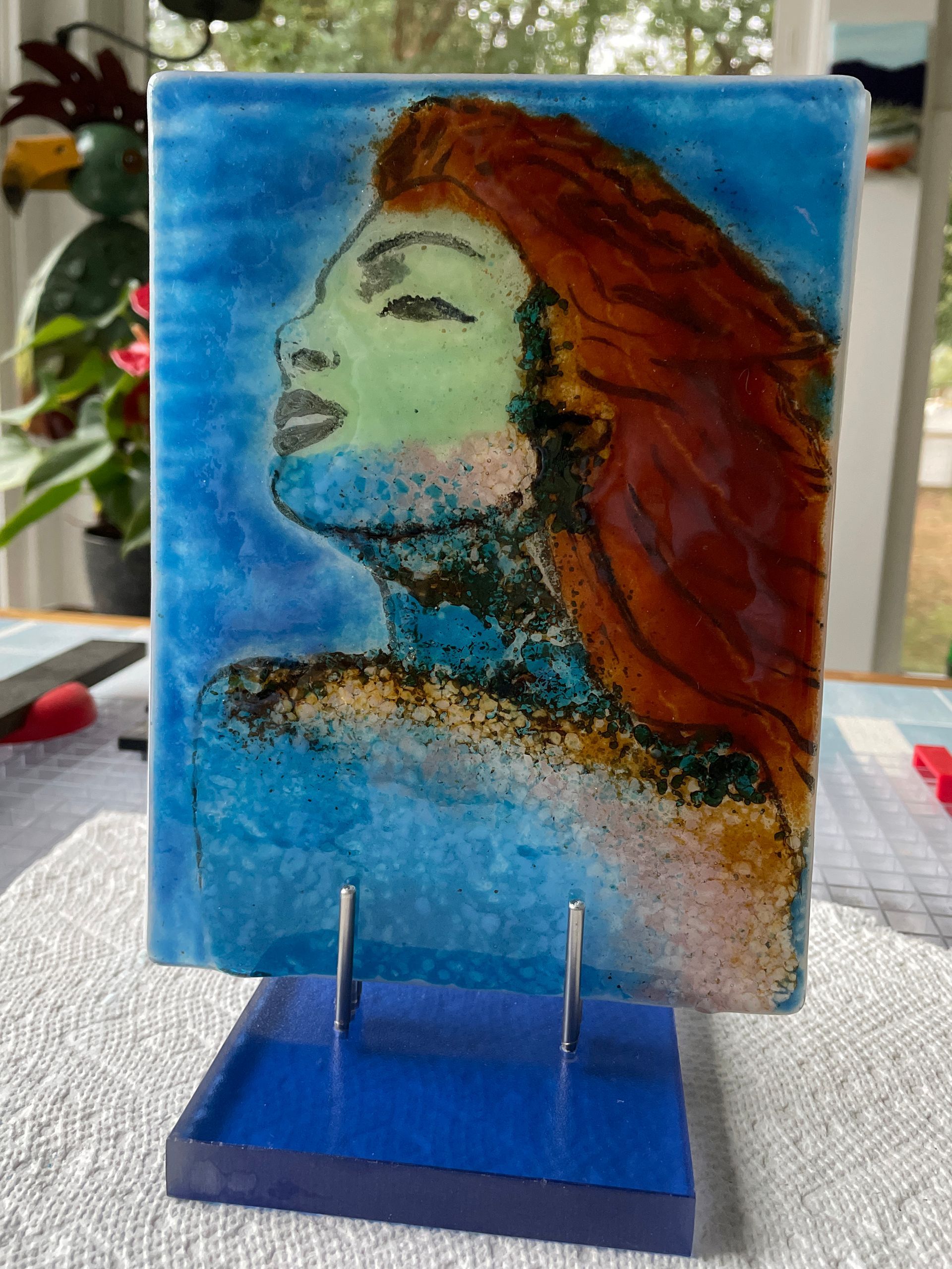
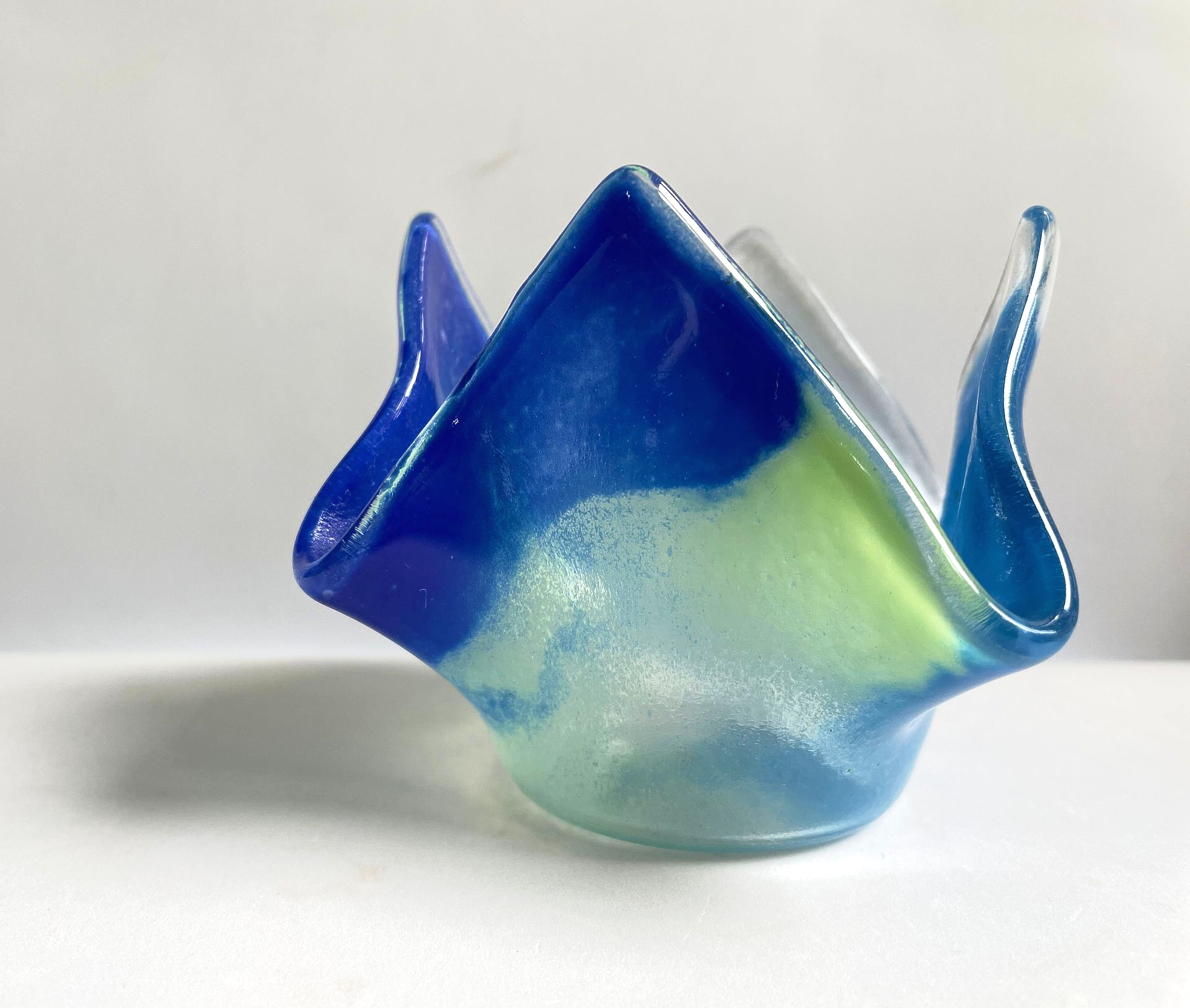
Fused glass pieces are built in layers and melted together in a kiln, which means they carry real depth and texture you can't get from a flat surface. Light behaves differently with glass than with any other medium — it passes through, refracts, and shifts throughout the day as the sun moves across a room.
Fused glass works especially well when:
- You want something that changes with the light. A glass piece near a window will look noticeably different at 9 am versus 4 pm — something paintings and prints can't do.
- You're decorating a functional space. Many of our glass pieces — trays, bowls, candleholders — double as everyday objects, not just wall art.
- You want texture and dimension, not just color. Fused glass has a tactile, sculptural quality even when it's sitting flat on a shelf or table.
- You love coastal, ocean-inspired themes. Our Glass Beach Decor pieces are designed around shells, coral, and sea life — glass lends itself naturally to translucent blues, sea greens, and sandy neutrals.
Acrylic Flow Painting: Movement, Color, and Wall Presence
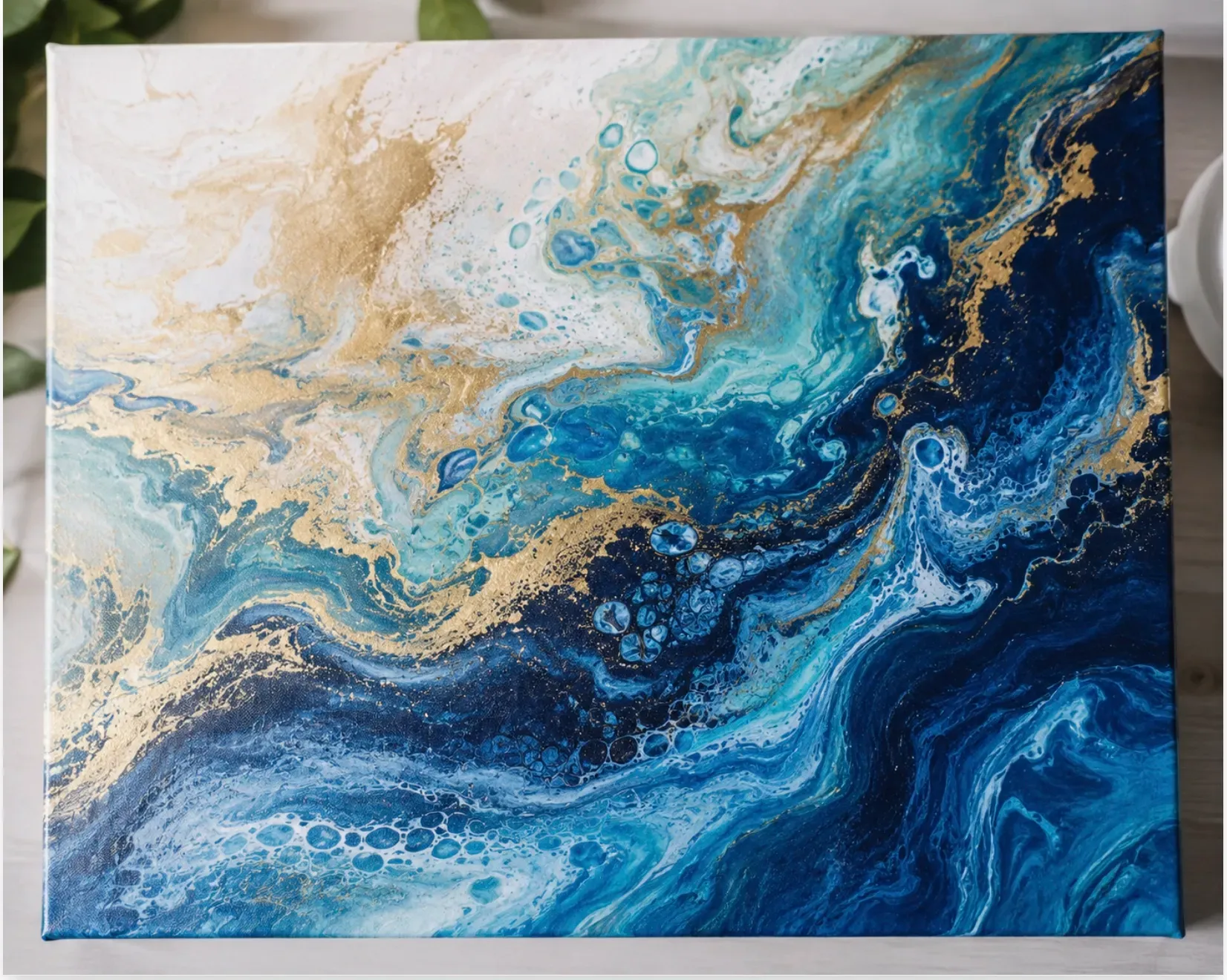
Our acrylic paintings use a flow technique, where paint is poured and manipulated to create organic, unrepeatable patterns — no two are ever alike, even within the same color palette. Each piece is finished unframed, with painted canvas sides, so it has a clean, gallery-ready look straight off the wall.
Acrylic paintings work especially well when:
- You want a statement piece for a wall. These paintings are meant to be the focal point of a room, not a supporting accent.
- You want bold, dramatic movement. The flow technique creates organic patterns — feathered color, cloud-like forms, shoreline-inspired bands — that feel alive rather than static.
- You're working with a specific color story. Because each painting is a poured, one-of-a-kind piece, you can find (or commission) a palette that fits your existing room rather than working around a print.
- You want something conversation-starting. Unframed, painted-edge canvases have a modern gallery feel that reads as intentional and elevated.
Can You Mix the Two?
Absolutely — and we'd encourage it. A glass piece on a shelf or console table pairs beautifully with an acrylic painting on the wall above it, especially when they share a coastal color palette. Think of fused glass as the dimensional, tactile layer of a room, and acrylic painting as the bold anchor point. Used together, they play off each other rather than compete.
Still Not Sure?
If you're torn between the two, think about the space first: a sunlit windowsill, shelf, or table calls for glass; a wall that needs a focal point calls for a painting. And if you're decorating a coastal-themed space specifically, our Glass Beach Decor and Acrylic Paintings collections were designed to complement each other.
Have a specific room in mind? Reach out — we're happy to help you figure out what would work best, or point you toward a custom commission if you have a color palette or size in mind.
Glass & Painting Articles